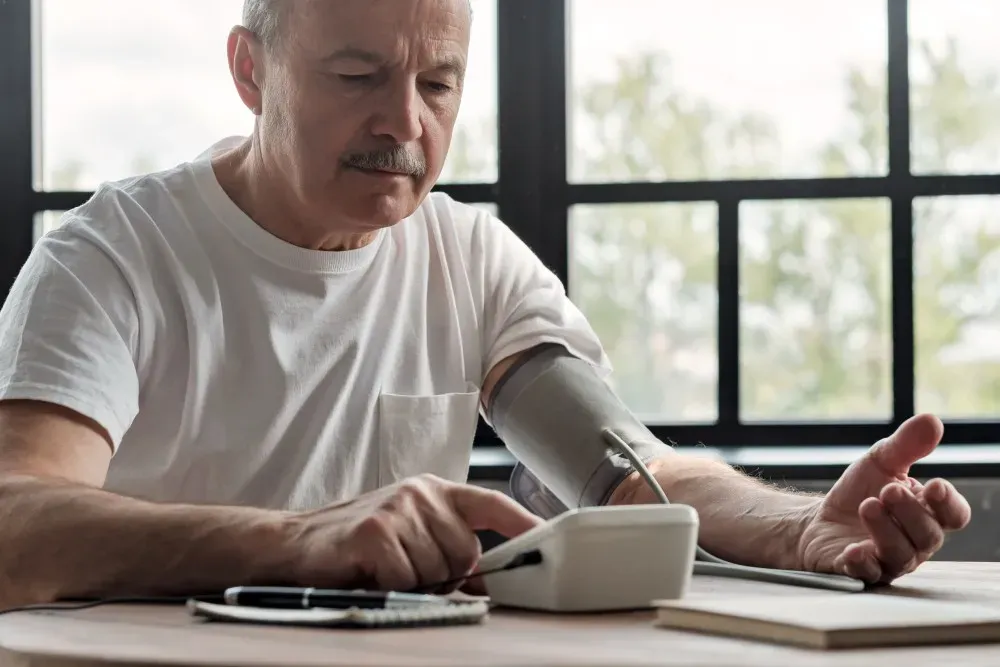
Recognize the Symptoms of High Blood Pressure
Many people wonder if they can feel their high blood pressure rising. You might watch for headaches or a flushed face. But high blood pressure is usually a silent condition.
At Houston Medical ER, we provide 24/7 emergency care in Houston and Spring, Texas. Our medical team wants to help you understand what to watch for.
According to the Centers for Disease Control and Prevention, nearly half of US adults have high blood pressure. Yet, only 59.2% of adults with the condition are aware they have it.
Why is high blood pressure called a silent killer?
High blood pressure, or hypertension, got this nickname because it typically causes no daily symptoms. You cannot rely on physical sensations to know if your numbers are high.
Many patients believe that headaches or dizziness are clear signs of a spike. In reality, chronic high blood pressure develops gradually.
Your blood vessels adapt to the pressure over time. This means you can feel perfectly fine while your cardiovascular system experiences quiet, ongoing strain.
We offer on-site screening and medical evaluations at our 24/7 facilities. Regular checks are the only reliable way to catch this condition before it causes damage.
Can a nosebleed be a sign of high blood pressure?
A typical, minor nosebleed is rarely a sign of high blood pressure. But severe or recurrent nosebleeds can be associated with advanced stages of the disease.
In a 2024 study of 250 emergency patients with nosebleeds, those with recurrent bleeding were 2.9 times more likely to have Stage 2 hypertension. Chronic high pressure weakens the fragile blood vessels in the back of your nose. This makes them more likely to rupture and bleed heavily.
If you experience a severe nosebleed that won’t stop, you need professional care. Our emergency rooms in Houston and Spring, Texas, are fully equipped to treat severe bleeding and evaluate your cardiovascular health.
When does high blood pressure become an emergency?
High blood pressure becomes a medical emergency when your readings spike dangerously and cause acute organ damage. This critical state requires immediate emergency medical attention.
The American Heart Association defines a hypertensive emergency as a reading over 180/120 mm Hg accompanied by signs of organ damage. These signs can include chest pain, shortness of breath, sudden weakness, or severe headaches.
Without immediate care, this rapid spike can lead to life-threatening complications like a stroke or heart attack.
If you experience these severe symptoms alongside a high reading, don’t wait. Visit us at Houston Medical ER immediately for prompt, expert evaluation.
And don’t wait for symptoms to check on your heart health. Whether you need a routine blood pressure check or are experiencing an urgent medical crisis, our team is here for you. We are open 24/7 with short wait times.
To learn more or speak with our staff, contact our team today or walk into one of our convenient locations.
For any medical procedure, patients respond to treatment differently, hence each patient's results may vary.
**In case of a life threatening emergency, immediately call 911.
**Information on this site is not intended or implied to be a substitute for professional medical advice, diagnosis or treatment. All content contained on or available through this site is for general information purposes only.
***By using this website and sending us your information, you are giving us permission to contact you by electronic and non-electronic means. We also track the conversions and collect user data to improve marketing.
****If you are vision-impaired or have some other impairment covered by the Americans with Disabilities Act or a similar law, and you wish to discuss potential accommodations related to using this website, please contact us.